


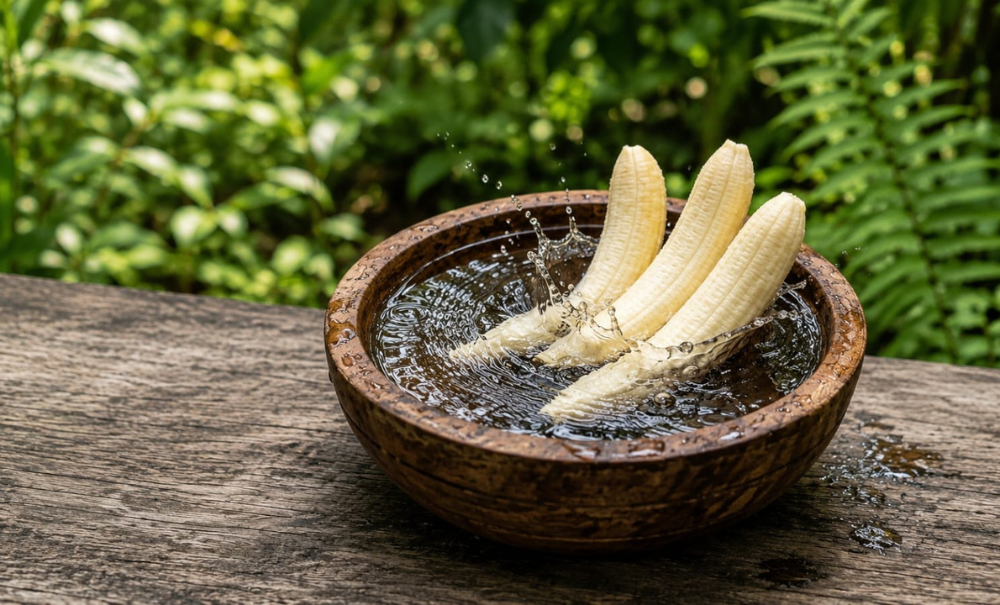
When I was a little girl in Kerala, Nendran banana was almost like a family member. I grew up eating Kerala banana chips made from Nendran bananas, which were a regular part of our traditional Kerala snacks. It sat in every kitchen corner, travelled with us on every train journey, and somehow appeared in every festival meal. Honestly, if Nendran could talk, it would probably scold us for overworking it.
But this banana deserves all respect. It grows properly only in Kerala and a tiny part of Tamil Nadu. Try growing it anywhere else, and it becomes soft and watery — absolutely not fit for chips. That firmness is what makes the Nendran banana so different from the regular “yellow” bananas that we eat raw.
Those soft bananas are not feasible for chips — they will simply melt in the oil.
If you try making Kerala chips with any banana other than Nendran, it won’t work.
Why?
- Regular bananas are soft and sweet
- Nendran is firm, less watery, and slightly starchy
- Nendran holds its shape when sliced
- When fried, it turns crisp, not soggy
- It has a natural golden colour
This is the main difference between Nendran and regular bananas, and why Nendran is the best banana for making banana chips.
And here’s a small secret we Malayalis know:
For the best salted chips, the banana must be fried within 8–12 hours of plucking.
After that, it starts becoming fruit, and then no amount of prayer can save your chips. At Tutu-Me, we always use freshly-plucked Nendran bananas because that is a key part of how Kerala banana chips are made.
People think banana chips are easy — just slice and fry! But that’s not the truth. Homemade-style Kerala banana chips require experience, attention to detail, and patience. It depends on several subtle details such as the maturity of the banana, the slicing technique, the thinness of the banana slices, the temperature of the oil, and that one perfect moment when you pour rock salt water into the oil. Trust me, it’s a skill to make perfectly sliced crunchy, tasty, and authentic Kerala banana chips.
At Tutu-Me, we make chips exactly the way I’ve made them for 40 years — fresh Nendran bananas, small batches, and only 100% cold-pressed coconut oil.
If you smell a little of coconut oil when you open our packet, don’t worry — that’s how Kerala kitchens smell, too.